


OUR NEWS & socials
Camassia in focus: the quiet strength for late spring landscapes
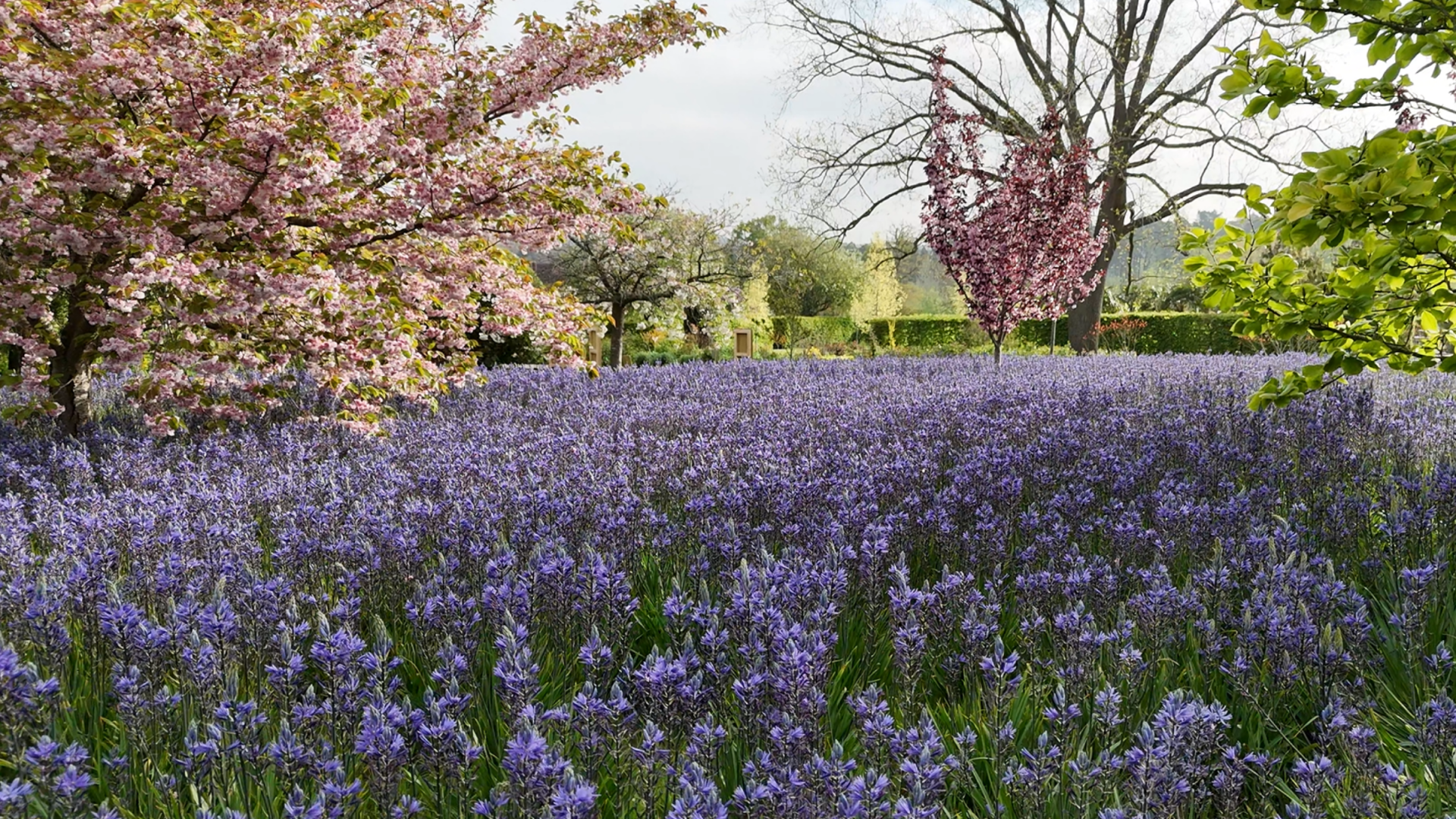
Elegant, resilient and full of natural character
There is a particular moment in late spring when Camassia comes into its own. The early narcissi have softened, many tulips are reaching their final flourish, and herbaceous planting is beginning to gather pace. In that transition, Camassia brings something highly valuable to the landscape: height, rhythm, freshness and a calm, natural presence.
Also known as the prairie lily, Camassia has its origins in North America, where it is associated with open, often moisture-retentive meadow and prairie landscapes. That natural character explains much of its appeal today. It feels relaxed and informal, yet its upright flower spikes give planting schemes a clear sense of structure.
For JUB Holland, Camassia is much more than a beautiful late-spring bulb. It is a reliable, long-lasting genus with strong potential for estates, parks, gardens and public landscapes — especially where planting schemes need to combine seasonal beauty, biodiversity value and resilience across changing conditions.
Extending the traditional bulb season
One of the great strengths of Camassia is its timing. Flowering throughout May, Camassia extends the bulb season beyond the classic early spring display. It creates a natural bridge between spring-flowering bulbs and the first real volume of summer flowering bulbs, perennials and grasses.
That makes it especially useful in mixtures and layered planting schemes. While earlier bulbs bring the first colour of the season, Camassia adds a later wave of height and movement, keeping the scheme alive for longer.
Naturalistic, but with structure
Camassia has a relaxed, almost meadow-like quality, yet its upright flower spikes give the planting definition. This combination is particularly valuable in larger landscape settings, where the desired effect is natural and immersive, but still clearly visible at scale. This is one of the reasons JUB Holland’s Jos Smit is particularly fond of Camassia.
Planted in generous drifts, Camassia creates movement and repetition. Used more selectively, it can act as a vertical accent among lower bulbs, emerging foliage or early perennials. Depending on the variety and growing conditions, bulbs can also produce more than one flowering stem, adding extra volume and a fuller effect once established.
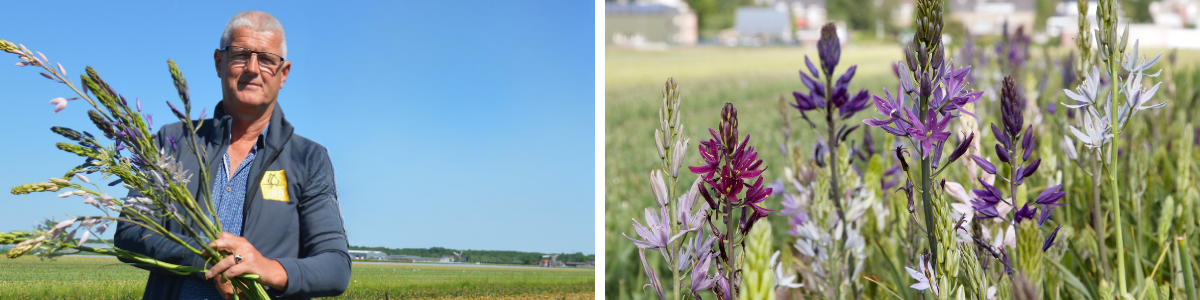
Jos Smit:
“Camassia brings together late-spring elegance, pollinator value and naturalising strength — making it a highly relevant bulb for UK landscapes where biodiversity, climate resilience and seasonal continuity matter.”
Reliable in the right place
Camassia is often described as elegant, but its reliability is just as important. In suitable conditions, Camassia can return year after year, gradually settling into the character of the site. It performs well in sunny to lightly shaded positions and is particularly useful in moisture-retentive soils, provided the ground is not waterlogged. This makes it well suited to a wide range of UK landscape settings, from estate lawns and parkland edges to meadow-style planting, generous mixed borders and informal grassland schemes.
As with all naturalising bulbs, success depends on early planting, good site selection and appropriate aftercare. The foliage should be allowed to die back naturally after flowering, so the bulb can store energy for the following year. In grass settings, this means mowing should be timed carefully.
A valuable bulb for biodiversity-led schemes
Biodiversity is no longer a secondary consideration in landscape planning. With Biodiversity Net Gain shaping conversations around developments, estates and public spaces, planting schemes are increasingly expected to contribute more: more seasonal value, more habitat variety and more food sources for pollinators.
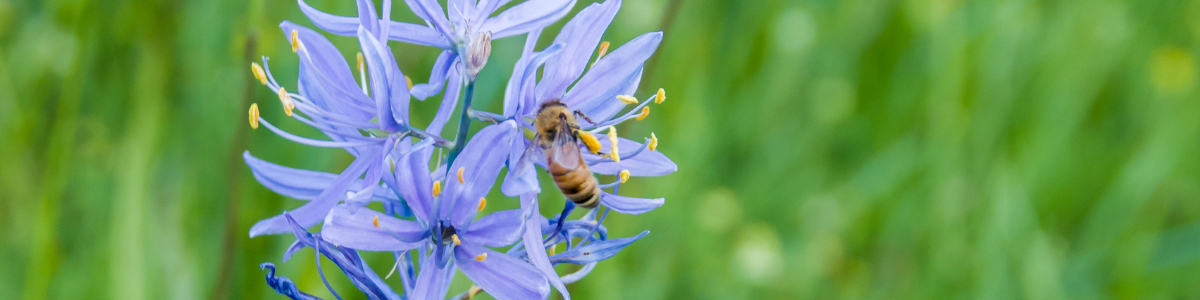
Camassia can play a useful role within that wider approach. Its open, star-shaped flowers are attractive and accessible to pollinators, while its late-spring flowering period helps extend the availability of nectar and pollen between early spring bulbs and summer perennials.
For estates and landscape professionals, this makes Camassia a practical and visually rewarding choice: refined in appearance, natural in character and useful in schemes where biodiversity, seasonal continuity and lower-maintenance planting all matter.
LEARN MORE ABOUT FLOWER BULBS AND BIODIVERSITY ►
Camassia at RHS Wisley
A strong example of Camassia’s long-term, naturalising value can be seen at RHS Wisley Garden, across the beautiful sloping meadows surrounding the Bowes-Lyon Rose Garden. JUB Holland supplied bulbs for the planting at Wisley in the early 2020s, and in 2026 the Camassia is still performing beautifully. That is precisely the kind of result that matters in professional landscape schemes: not a one-season effect, but a planting layer that settles in, returns and continues to contribute to the display over time.
For anyone working with bulbs in designed landscapes, seeing Camassia in context is far more powerful than looking at a catalogue image alone. At Wisley, its value becomes immediately clear: the height, the colour, the way it catches the light, and the way it sits between surrounding planting without overwhelming it.
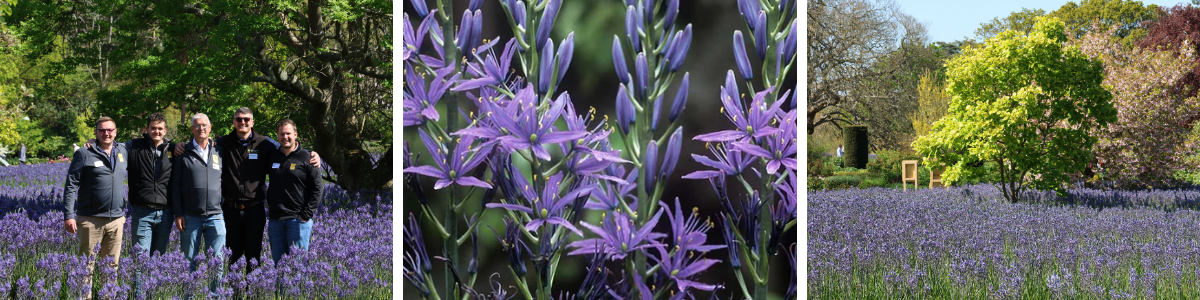 Camassia in flower at RHS Wisley
READ ALL ABOUT OUR UK ROADSHOW 2026 AT RHS WISLEY GARDEN ►
Assortment highlights
Camassia leichtlinii Caerulea
The classic blue Camassia for naturalistic impact
Camassia leichtlinii ‘Caerulea’ is the classic choice for a soft, natural blue effect in late spring. Its upright spikes of star-shaped flowers bring height and movement to grassland, meadow-style planting and mixed borders.
This variety is particularly effective in generous drifts, where it creates a calm blue haze without feeling too formal. It combines beautifully with late narcissi, emerging perennials, ornamental grasses and later-flowering Allium.
Camassia leichtlinii Sacajawea
Creamy-white flowers with striking variegated foliage
Camassia leichtlinii Sacajawea brings something slightly different to the Camassia palette. Its creamy-white flowers are elegant and subtle, while the variegated foliage — green leaves edged with pale yellow to cream — adds ornamental value even before the flowers open.
This makes Sacajawea especially interesting for designed borders and more refined naturalistic schemes, where foliage quality matters as much as the flowering moment. It works well as a light, fresh accent among soft greens, blues, creams and early summer perennials.
Camassia cusickii
Pale blue height with a strong meadow character
Compared with taller Camassia leichtlinii varieties, Camassia cusickii has a more modest height, making it especially useful where a softer, lower late-spring layer is desired. It sits beautifully in meadow-style planting, parkland edges, estate lawns and generous mixed borders, adding movement and colour without becoming too dominant.
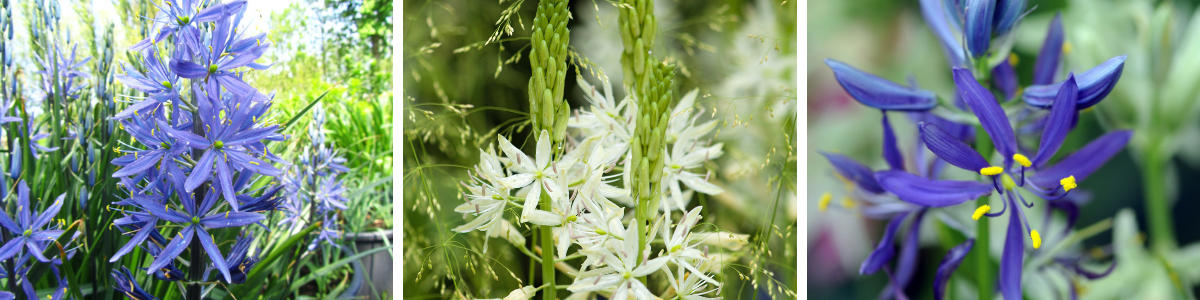
From left to right: Camassia leichtlinii Caerulea, Camassia leichtlinii Sacajawea and Camassia cusickii
BROWSE THROUGH OUR CATALOGUE AND DISCOVER OUR FULL ASSORTMENT ►
Breeding and selection at JUB Holland: the NEW Camassia mix
At the JUB Holland breeding department, Camassia is selected with professional landscape use in mind. Colour, flowering time, height, naturalising potential and performance in real planting conditions all play a role in how we assess its value.
That practical approach has led to the NEW Camassia mix: an exclusive selection combining shades of blue, purple, white, silver and soft pink accents. As the flower spikes open from the bottom upwards, the mix brings movement and variation to the border over several weeks.
For landscape professionals, this means more than a beautiful display. The mix offers rhythm, reliability and seasonal continuity — ideal for estate lawns, meadow-style planting, generous borders and public landscapes where a relaxed yet considered effect is desired.
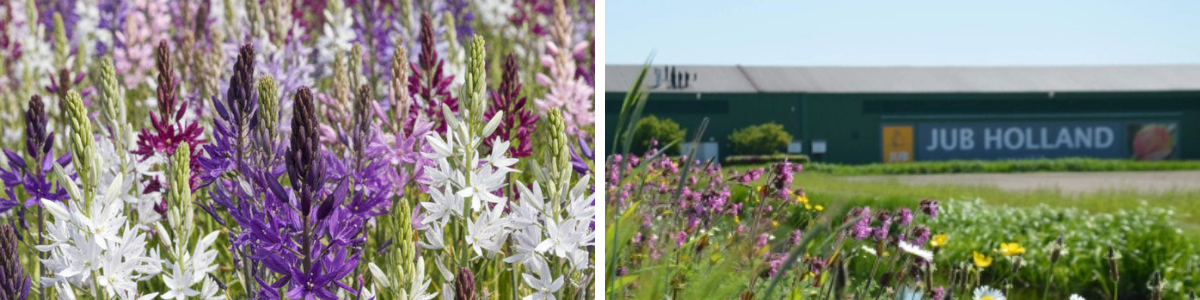
Camassia Mix from JUB Holland
Combining Camassia with other bulbs and plants
Camassia is highly versatile in combinations. It works beautifully with later-flowering narcissi, late tulips, Allium, Hyacinthoides, ornamental grasses, early perennials, meadow-style planting and soft groundcover.
In borders, Camassia can be used to create height before perennials reach full volume. In grassland, it can appear as a natural seasonal layer, especially where mowing can be delayed until the foliage has ripened down.
Colour combinations can be calm and understated — for example white Camassia with pale yellows and fresh greens — or more atmospheric, using blue Camassia with purples, deep tulips or later Allium.
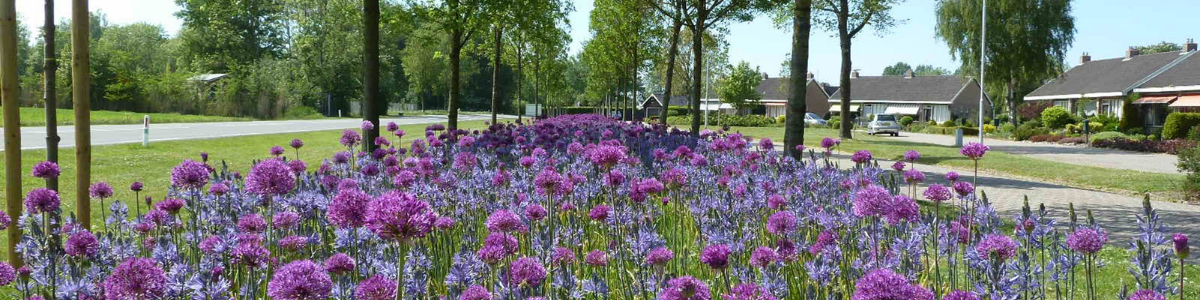
The second phase of Mixture Volendam
DISCOVER OUR MIXTURES AND COMBINATIONS ►
Thinking about Camassia for your next project?
The JUB Holland UK team would be happy to advise on Camassia varieties, mixtures and planting approaches — with attention to flowering succession, biodiversity value, site conditions and long-term performance.
Whether you are looking for a naturalistic meadow effect, a refined estate border, a long-flowering bulb scheme or a bespoke mixture for a specific location, we can help you select the right bulbs for the right setting.
CONTACT US TO PLAN YOUR NEXT FLOWER BULB PLANTING SCHEME ►
Photo credits: RHS Wisley Gardens & JUB Holland


check out our socials


