


OUR NEWS & socials
Chelsea Flower Show 2026 through a landscape lens
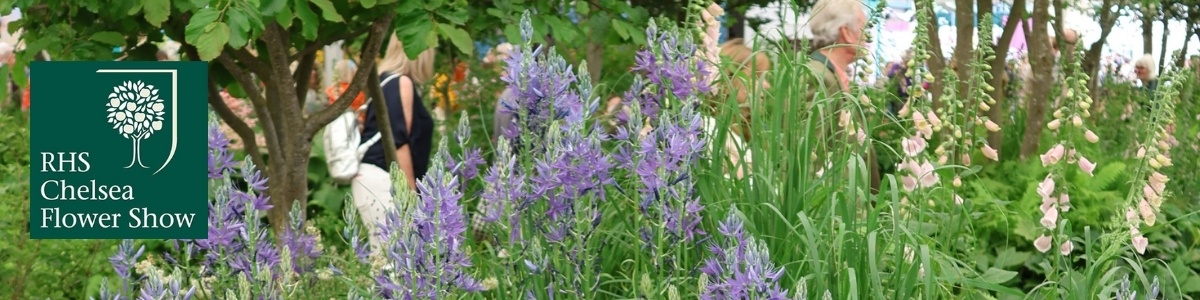
RHS Chelsea Flower Show is always a stage for exceptional garden theatre: bold ideas, refined planting, craftsmanship and details brought together in one intense week. For landscape professionals, Chelsea is more than a showcase. It is a place to read where horticulture is heading. When our UK Landscape Team visited Chelsea this week, one message came through clearly: planting is not judged by beauty alone. Across the gardens, exhibits and conversations, plants were repeatedly connected to climate resilience, biodiversity, wellbeing, and social value.
The real challenge is not simply to admire what happens at Chelsea, but to translate the ideas into places that must work every day: parks, verges, estates, cemeteries, residential areas, business parks, rainwater buffers and urban routes. That is where flower bulbs add a highly valuable layer, as part of a wider planting strategy: bringing early-season impact, ecological value and recognisable seasonal moments that support both people and place — while also opening up practical possibilities for more extensive management.
Let’s explore how three Chelsea themes translate into practical flower bulb solutions for professional landscapes: climate resilience, biodiversity and wellbeing in public spaces.
Planting for a changing climate
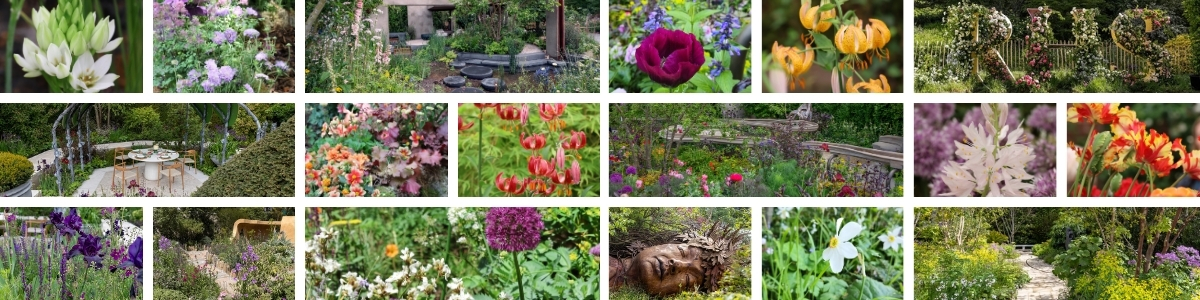
In The Killik & Co ‘A Seed in Time’ Garden, designed by Baz Grainger, climate resilience was made tangible through rainwater capture, a central wetland, simple materials and resilient planting. The Tate Britain Garden, designed by Tom Stuart-Smith, approached climate consciousness from another angle, combining woodland-inspired planting, drought-tolerant species and reclaimed materials. Together, these gardens showed how climate adaptation can be expressed not only through technical solutions, but through planting, material choices and long-term ecological value.
Across Chelsea, that same direction could also be read in the planting itself. Naturalistic and prairie-style combinations appeared throughout the show, with grasses, late-spring bulbs and robust perennials creating schemes full of movement, texture and seasonal rhythm. These plants were not used for effect alone. They pointed towards planting that can cope with variable conditions while still feeling rich, generous and carefully designed.
For professional landscapes, climate-conscious planting is all about selecting species with the right kind of resilience for the conditions of a specific site. Dry, exposed verges ask for different bulbs than seasonally moist wadis or low-lying park edges. Stony urban strips, poor soils and areas with fluctuating moisture levels all require their own carefully matched selection.
Many spring-flowering bulbs make use of the early-season window, when light and moisture are available before grasses, trees and herbaceous planting reach full growth. In the right place, they can return year after year with limited intervention, adding colour, structure and ecological value at a moment when many landscapes are still visually quiet.
JUB Holland approaches bulbs as site-specific building blocks. In dry, sunny and nutrient-poor places, prairie-style mixtures can bring rhythm and resilience without irrigation. In low-lying or seasonally moist locations, wadi mixtures offer a different answer, with bulbs selected for conditions where water temporarily plays a larger role.
Climate adaptation is the art of matching species, flowering periods and growth behaviour to the realities of the landscape.
READ ALL ABOUT CLIMATE-CONSCIOUS PLANTING WITH FLOWER BULBS ►
Biodiversity in bloom
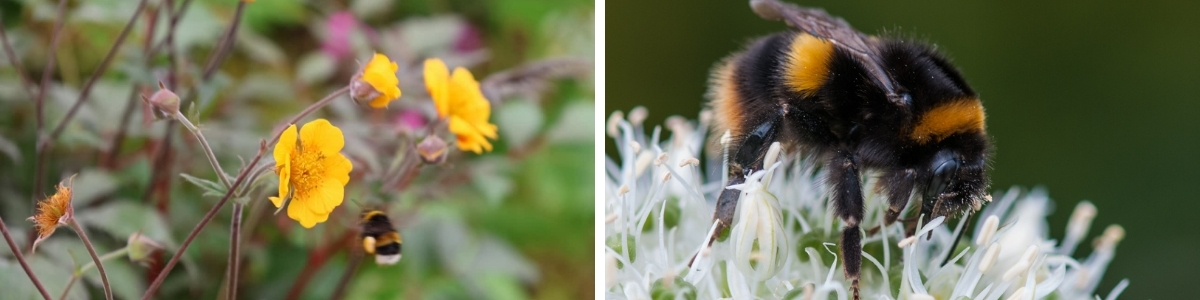
Chelsea 2026 showed that biodiversity is no longer treated as an optional green extra. It has become part of the design language itself. In Fettercairn: The Angels’ Share for example, the planting moved from grassland to woodland and was refined to support endangered native pollinators, with species chosen for their value to bees, hoverflies, moths, butterflies and other insects.
If planting is designed around the needs of pollinators, timing becomes just as important as plant choice. Food must be available when insects are active — including at the very start of the season.
That is where early-flowering bulbs show their unique ecological value. Snowdrops, crocus, muscari, alliums and other spring-flowering species can provide nectar and pollen when the wider landscape is still waking up. They create the first step in the flowering season and help bridge the gap between winter and the richer flowering periods that follow.
This makes flowering succession more than a visual design tool. A well-planned bloom calendar can also become a food calendar for pollinators. With the right naturalising bulb selection, the season can start as early as January and continue well into autumn, with species following one another in colour, structure and ecological value. Herbs, wild flowers and perennials are natural companions to that bulb layer, enriching the planting and extending the offer for bees, butterflies and other insects.
This is also where mowing less can strengthen biodiversity. Reduced mowing gives flowering plants the time and space to complete their cycle, set seed and support insects. Those principles are at the heart of The Vibrant Verge, our concept for transforming grass verges into long-flowering, biodiversity-rich landscape elements. Flower bulbs bring the first nectar, pollen, colour and structure of the season; wild flowers and herbs extend and enrich the offer into the months that follow.
With the right species selection and mowing regime, a verge can become more than a strip of grass: a flowering, low-input landscape element with ecological value, seasonal rhythm and public appeal.
The emotional value of seasonal planting
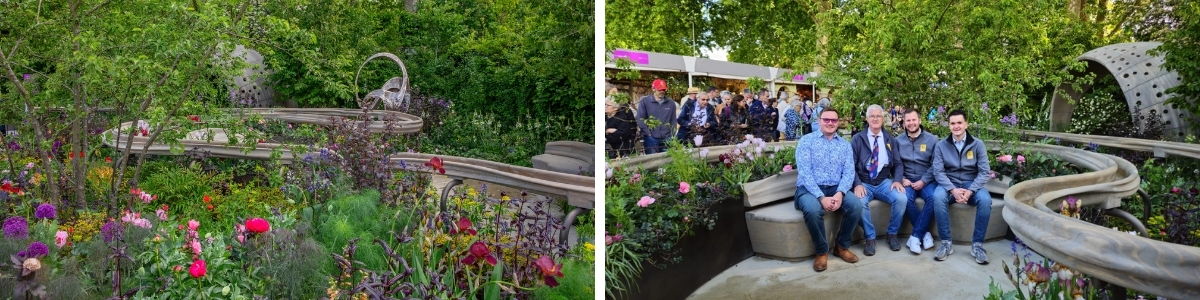
Chelsea also showed how strongly gardens can connect to people. Several gardens this year were built around human stories: health, resilience, inclusion, refuge, memory and connection. The Children’s Society Garden, for example, focused on teenage mental health, resilience and the beauty of imperfection. Parkinson’s UK – A Garden for Every Parkinson’s Journey, designed by Arit Anderson, added another powerful layer to this theme: a peaceful, uplifting garden for people living with Parkinson’s and those supporting them, with sensory zones for energy, rest and night-time comfort.
That focus is highly relevant for public space. A park, cemetery, school ground, care environment or everyday walking route is never just a piece of green infrastructure. It influences how people feel, move, pause, meet and remember.
Flower bulbs contribute to that in a very direct way. The first crocuses after winter. Daffodils along a familiar route. Camassias rising through long grass. Tulips returning in a civic border. These are not just floral effects; they are seasonal markers. They make people notice a place again. They create anticipation. They give a landscape a pulse.
This is where our participatory concepts Planting Together and Picking Happiness become relevant. They show how bulbs can create a finished planting scheme while also inviting people into the process. Schools, care settings, residential neighbourhoods, estates and parks can all benefit from planting moments that bring people together before the flowers even appear. Later in the season, picking gardens add another layer of experience: flowers that can be touched, gathered, shared or taken home. That simple act of picking turns public planting into something personal.
What goes into the ground can grow into more than flowers. It can grow into pride, recognition and a stronger connection with public green space.
DISCOVER OUR PARTICIPATORY CONCEPTS ►
From inspiration to implementation
Chelsea 2026 confirmed that planting is being asked to do more. It must be resilient, biodiverse, beautiful, meaningful and manageable. It must support people as well as nature. It must respond to both climate pressure and maintenance reality.
As flower bulb specialists, we look at these themes through a practical landscape lens. What works in a roadside verge? Which bulbs suit dry urban conditions? What performs in seasonally moist sites? How can flowering succession be planned from late winter into summer? How can a concept be visualised, budgeted, planted and maintained?
The latest JUB Holland Landscape Catalogue 2026/27 brings these solutions together: from prairie and wadi mixtures to The Vibrant Verge, naturalising bulbs, mechanical planting and design tools such as the Bloom Calendar and FlowerDesigner App.
Chelsea offers inspiration. Our specialist knowledge turns that inspiration into planting that performs beyond the showground: landscapes that bring colour, support biodiversity, mark the seasons, involve people and remain practical to manage over time.
Beyond the show garden, that is where the real work begins.


check out our socials


