


JUB Nachrichten
Soziale Medien
Snowdrops. Small flowers. Lasting impressions.
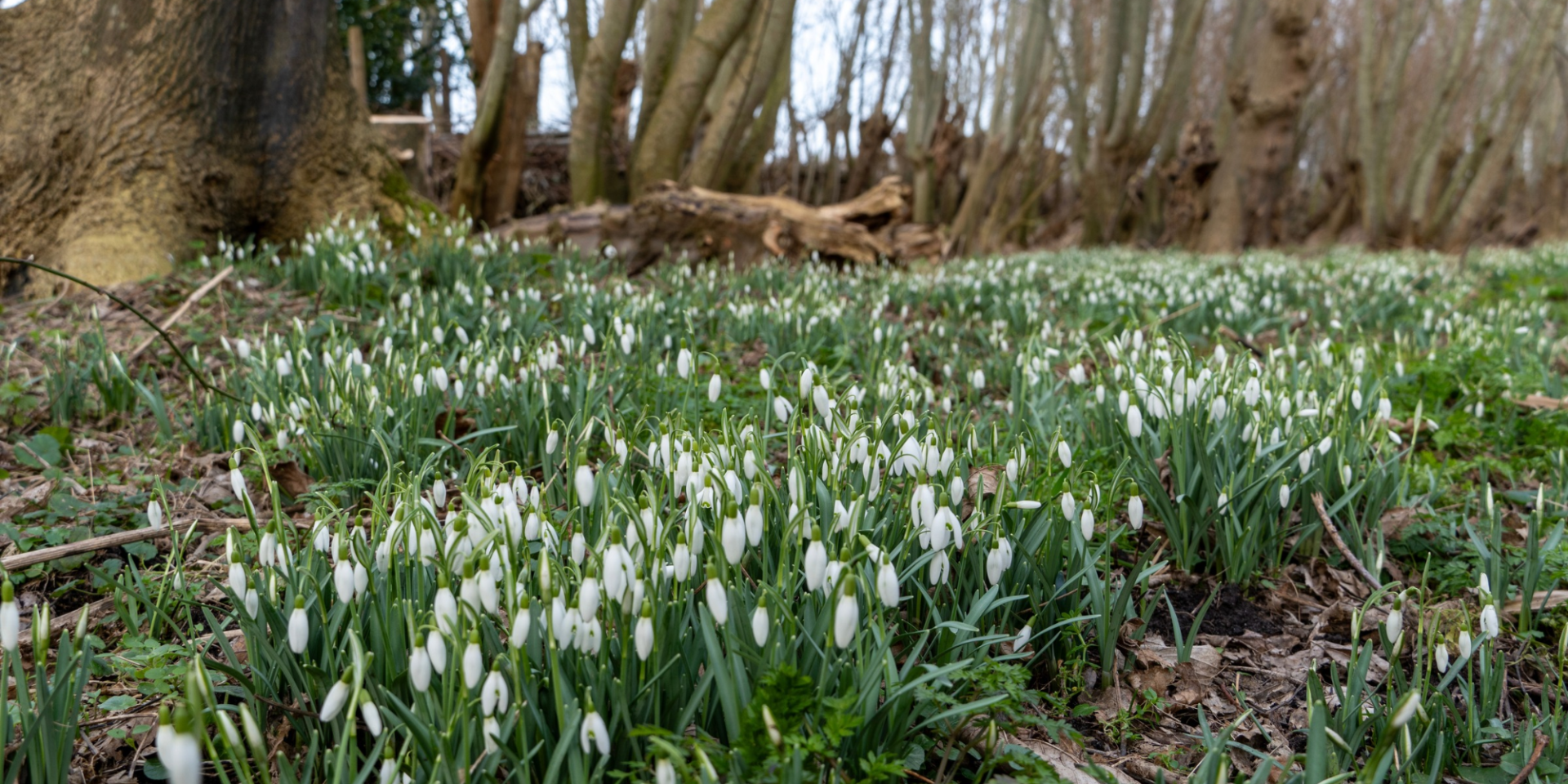
November is a busy month for bulb planting. It is also the right moment to plan what comes next. For estates, historic gardens and public landscapes, JUB Holland’s In the Green range offers a further planting opportunity from late January 2027 — bringing snowdrops and other woodland favourites into schemes designed to return year after year.
GIVE VISITORS AN EARLY WELCOME
The first snowdrops give people a reason to venture out while much of the garden is still resting. White flowers stand out against fallen leaves, bringing detail and interest to the ground beneath established trees. A woodland walk becomes somewhere to linger, take a photograph or look more closely at the first signs of the changing season.
Part of their appeal lies in how they work at different scales. Broad drifts create an impression from a distance, drawing the eye through the trees. Smaller groups beside a path bring visitors close enough to appreciate individual flowers, from the simplicity of single snowdrops to the intricate detail of double forms. Thoughtful placement makes both experiences part of the same walk.
Snowdrops also provide a starting point for a longer sequence of woodland colour. Winter aconites add bright yellow to the late-winter display, while native bluebells bring fragrance and blue flowers later in spring. Planning that progression gives visitors something different to discover as the weeks unfold, with each visit revealing another stage of the season.
For those managing the grounds, the lasting value is in planting that belongs to the setting. With suitable conditions and care, naturalising bulbs can return and gradually spread, creating fuller displays around the trees, paths and views that give a place its character. Over time, their annual appearance can become something visitors recognise and look forward to: a seasonal highlight worth returning for.
IN THE GREEN: ANOTHER PLANTING OPPORTUNITY
In the Green means supplying plants with green foliage and active roots, usually towards the end of the flowering period. Planting dry bulbs is a quicker planting method. However, planting In the Green offers added reassurance: the plants already have roots ready to take up water and nutrients as they settle into their new position. The visible foliage also makes spacing easier, helping you create natural-looking groups and see immediately where more plants are needed. Freshness, careful handling and prompt planting remain essential to successful establishment.
JUB’s In the Green season starts from late January, with the timing of individual species depending on their development and seasonal conditions. Planning now allows species, quantities and delivery to be coordinated with your team’s planting schedule.
It is a practical option for extending existing drifts, introducing spring interest along a woodland walk or developing an area in stages. The aim is to establish plants well and build a display for the seasons ahead.
THE RIGHT BULB FOR THE SETTING
Job van Eeden, JUB Holland: “We help select species and planting patterns around the character of the grounds, the desired flowering sequence and the way each area is managed. A broad drift seen across a lawn needs a different approach from small groups beside a winding path.”
Choosing naturalising bulbs calls for a close look at the site. Light beneath the canopy, soil moisture, drainage, existing vegetation and mowing arrangements all influence what will thrive.
For snowdrops, moisture-retentive, well-drained soil and partial shade provide a useful starting point. Beneath mature evergreens, root competition and drier ground deserve particular attention. A shaded space still needs the right soil conditions.
JUB’s In the Green selection offers different ways to shape the display:
- Galanthus nivalis — the classic single snowdrop, ideal for repeated groups and natural-looking drifts.
- Galanthus nivalis ‘Flore Pleno’ — the double snowdrop, adding intricate flower detail beside paths and in places where visitors can enjoy a closer look.
- Galanthus elwesii — larger flowers and broader, grey-green foliage give this snowdrop a more substantial presence.
- Eranthis cilicica — winter aconites introduce bright yellow flowers close to the ground, adding warmth to the late-winter picture.
- Hyacinthoides non-scripta — native bluebells carry the woodland display further into spring, with fragrant blue flowers suited to partially shaded settings.
FROM DELIVERY TO SOIL
Successful In the Green planting depends on an organised handover from delivery to the planting team. Prepare the area beforehand, keep roots protected from drying winds and plant promptly on arrival, when the ground is workable.
Handle plants carefully, retain their roots and replant at their previous growing depth. Water them in to settle the soil around the roots. Once flowering has finished, allow the foliage to die back naturally; in grass, this means planning the first cut around the bulbs.
Job van Eeden: “These practical details are central to JUB’s advice. With bulb expertise dating back to 1910, we help grounds teams connect species selection, planting design, supply and aftercare — whether the project involves a few carefully placed groups or tens of thousands of bulbs.”
PLAN NOW. PLANT IN THE GREEN.
This November, look at the places where an earlier start to the flowering season would make a difference: the approach to the house, a quiet woodland path or the view beneath established trees.
Speak to the JUB Holland UK team about species, quantities and delivery dates for In the Green planting from late January 2027. Together, we can turn those opportunities into a practical planting plan.


Haben Sie Fragen?
Wir helfen Ihnen
check out our socials


